As-Built Drawings Done Right: Reconcile Field Markups Without Redrawing Every Sheet
AutoMEP Team,
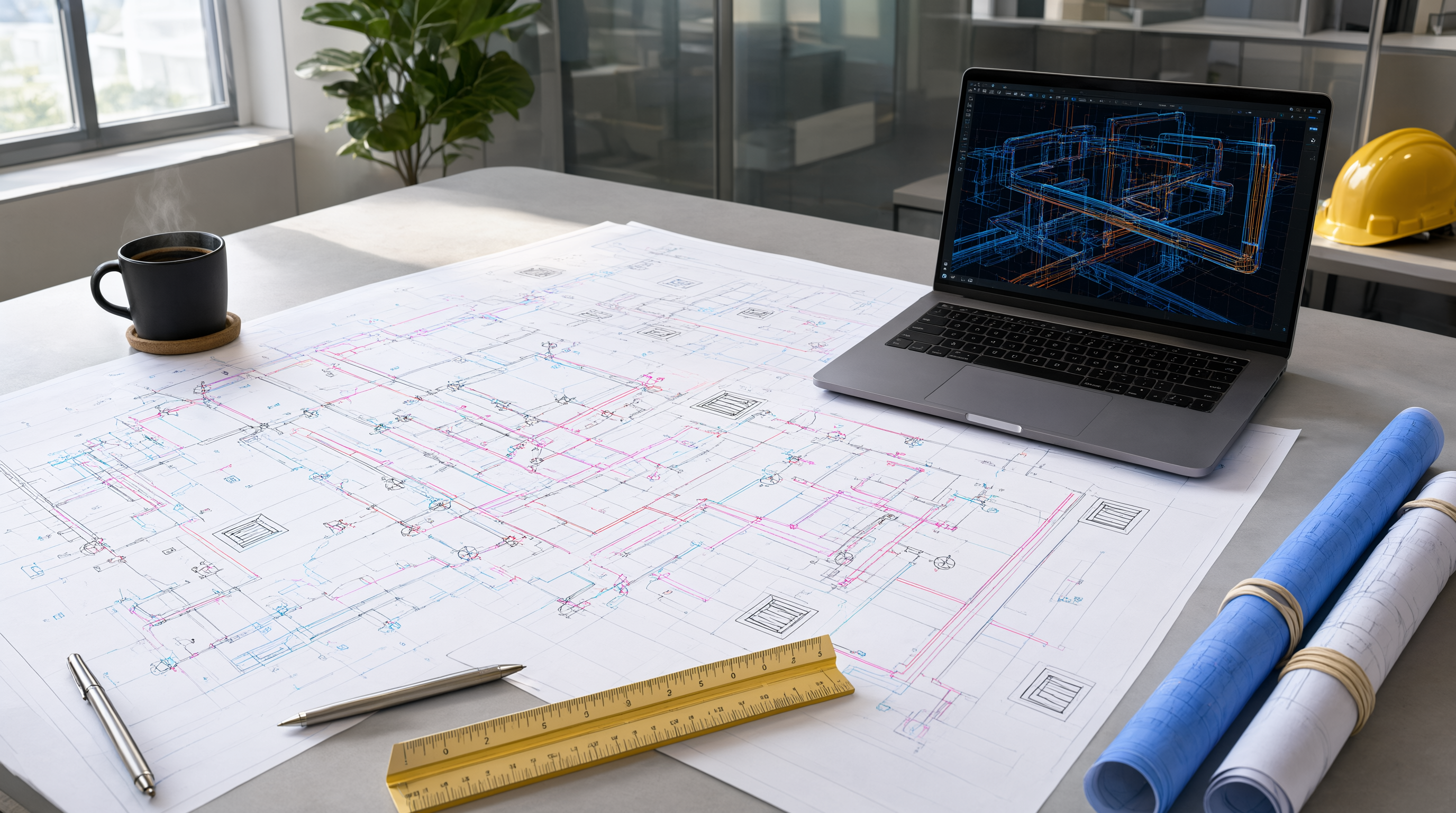
Every MEP firm knows the ritual. The project wraps up, the field team hands back a stack of record drawings covered in red pen, and one of your drafters loses the next week or two reconciling every as-installed change across the drawing set. The markups are never as tidy as you hope. Half the changes are described in cryptic field shorthand, a third conflict with each other, and the final few require you to redraw sheets that were fine on paper but changed in the ceiling. As-built work is the purest form of repetitive drafting, and it is eating billable engineering hours at exactly the moment you want to close the job and move on.
Why As-Built Reconciliation Takes So Long
Field markups come back as annotations on prints or PDFs, and someone has to translate every one into the model. Duct rerouted around a beam that was not in the coordination model. A plumbing branch that shifted two feet to clear a sprinkler main. A VAV box that moved to the other side of a corridor because the architect relocated a diffuser. Each change looks small in isolation. Multiplied across twenty or thirty markups per sheet, the work compounds into days of select, erase, redraw, re-annotate, and re-coordinate.
The hidden cost is not the drafting itself. It is the attention switching. The drafter reconciling as-builts is not producing new work, not responding to new clients, not helping with the project that actually pays the next payroll. Every day of as-built cleanup is a day your most experienced CAD talent spends looking backward instead of forward. Multiply that across every project you close in a year and the number gets uncomfortable fast.
The Markup Translation Problem
Here is where most of the friction lives. A field superintendent writes "shift 8in N, clr plg" next to a run of duct. The drafter has to interpret the intent, find every view and detail that run appears in, make the change consistently, and verify nothing else breaks. Plans, enlarged plans, sections, risers. Miss one instance and your as-built set ships with a contradiction that surfaces on the next project when someone trusts the record drawings.
The standard answer is more process: markup review meetings, checklist signoffs, a second set of eyes on the reconciled set. Those are good practice and they do catch errors. But they are also more hours. Process helps you get the reconciliation right, it does not make the reconciliation itself any faster. The underlying work, editing linework sheet by sheet, remains stubbornly manual.
What Plain-English Automation Changes
The breakthrough is that reconciliation edits are descriptive. "Move this duct run two feet north, update all affected tags and leaders, and check that it clears the sprinkler main." That sentence is the entire task. A drafter executes it in ten minutes of clicking. But the instruction itself is the hard part to produce, and modern automation tools can now execute that instruction directly on your DWG or RVT files.
That is exactly how AutoMEP handles as-built work. You upload the record drawing set, describe each markup change in plain English, and the changes are applied across the drawings without macros, LISP routines, or a plugin rollout. No one writes a script for a one-off as-built reconciliation, and no one should have to. Describe the change, verify the result, move to the next markup. The drafter who spent two weeks on as-built reconciliation now spends the better part of an afternoon reviewing applied changes instead of clicking them into existence.
A Practical Workflow for Markup Reconciliation
Start with triage. Before touching the CAD files, separate the markups into three buckets: simple geometry moves, changes that affect annotation and tags, and changes that require re-coordination with other trades. The first two buckets are pure execution work, describe each change and apply it. The third bucket still needs an engineer's eye, but only after the routine edits are already done.
Then work sheet by sheet with a verification pass after each batch of changes. Applied changes should be reviewed against the original field markup, just as you would review a drafter's manual work. The difference is that you are reviewing instead of producing. Your CAD manager's review time stays the same while the production time behind it collapses, which is the entire point.
Record Drawings Worth Trusting
As-builts have a second life that nobody talks about. The next tenant improvement project, the retrofit five years from now, the facilities team troubleshooting a system at 2 AM. Every one of those depends on the record drawings being accurate. When reconciliation is a rushed, resented afterthought crammed into the end of the project, errors creep in. When the process is fast and systematic, the record set earns its name.
MEP firms do not win work because they are good at as-builts. They keep work because their documentation is trustworthy across the lifecycle of the building. Treat reconciliation as engineering work that deserves engineering leverage, not as the punishment task that goes to whoever has bandwidth. The closeout set goes out faster, your drafters get back to revenue work sooner, and the next project starts from drawings you can actually believe.
Close Out Faster Without the Drafting Penalty
If as-built reconciliation is eating your team's hours at the end of every project, it is worth seeing what plain-English drawing automation does to that workflow. Upload your record set, describe the field markups as you would brief a drafter, and let the repetitive edits take care of themselves while your engineers review. Try it on your current closeout project and see how many hours stay on the revenue side of the ledger. Start your free trial at AutoMEP and close the next project without the two-week drafting penalty.