The Ceiling Plenum Shuffle: Re-Routing Duct and Piping After a Coordination Clash
AutoMEP Team,
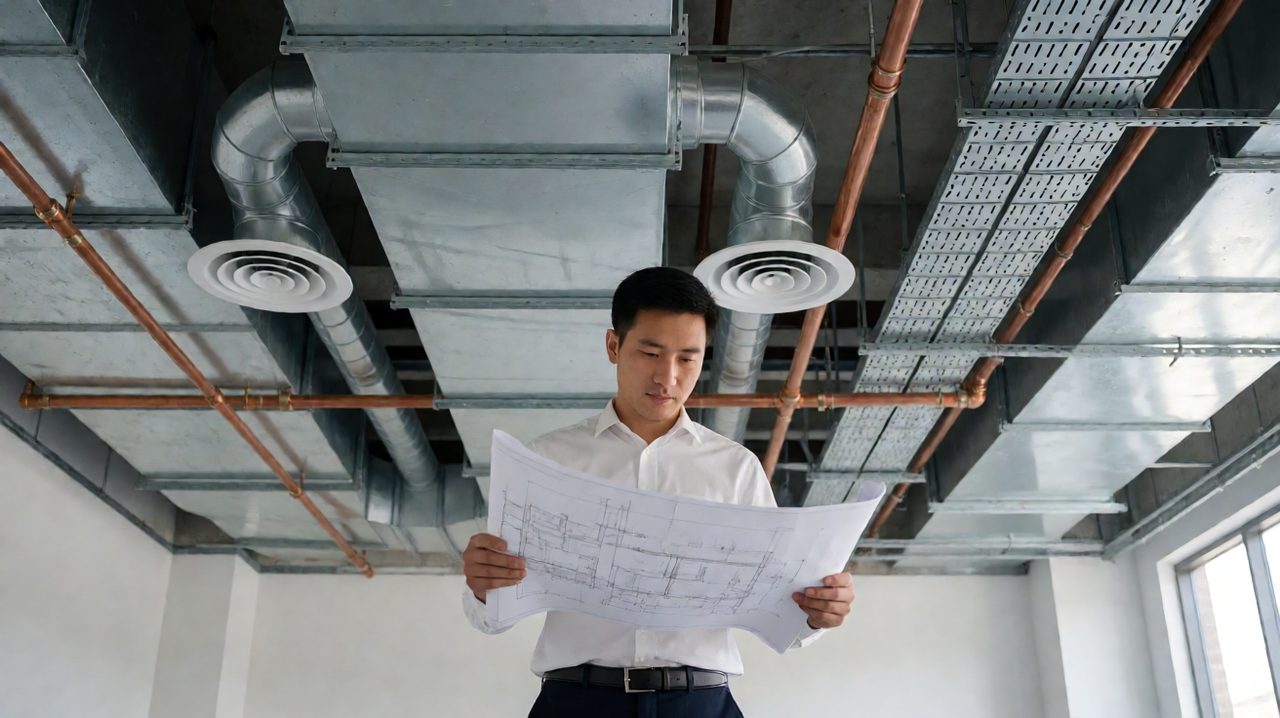
How a coordination clash becomes a redrawing exercise
Coordination meetings exist to catch collisions before they reach the field, and they work. The clash report comes back with a dozen conflicts, and most of them are small. Then comes the one that is not. A main duct run occupies the same ceiling zone as the chilled water piping, the conduit bank cannot clear either of them, and the structural beam that was supposed to be elsewhere is exactly where it was drawn. Somebody has to move the duct, and the moment that decision is made, the redrawing exercise begins.
This is the unglamorous reality of coordination-driven changes. The engineering decision takes a short discussion in a coordination meeting. The drafting work it creates can consume a designer for days. One reroute becomes many, because MEP drawings are a web of dependencies. Move the duct and you have redrawn the ductwork plan, the affected branch takeoffs, the section views that show the new elevation, the riser diagram if the run feeds a different shaft, and every coordination drawing that referenced the original location. Miss any one of them and the set goes out inconsistent, which is exactly the kind of error coordination was supposed to prevent.
Why one reroute touches every discipline's drawings
Mechanical is the obvious starting point, but the blast radius is wider than the mechanical sheets. Plumbing has to shift the piping that now conflicts with the relocated duct, which means new hangers, new offsets, and updated elevations on the plumbing plan and the plumbing riser. Electrical owns the conduit bank that threaded through the original arrangement, so the electrician's routing, junction box locations, and possibly the conduit schedule all need revision. The fire protection trade, working from the MEP coordination set, has to verify sprinkler head locations against the new duct path because coverage patterns and obstruction rules depend on where the large duct sits.
Then there are the deliverables that cut across disciplines. The combined coordination drawing, the reflected ceiling plan that shows diffusers relative to the new duct location, the enlarged mechanical room or corridor sections, and the sheet that documents the final coordinated routing for the field. A reroute decision in one meeting ripples across four or five sheet types and three trades. The firms that handle this well treat a clash-driven reroute as a coordinated documentation update, not a mechanical-only edit.
Where the manual reroute workflow breaks down
The typical workflow is honest work, but it has predictable failure points. The designer starts on the ductwork plan, redraws the run, adjusts the takeoffs, and updates the fittings. Then they open the sections, match the new elevations, and fix the riser diagram. Somewhere in the middle, they get pulled into another meeting, and when they return, they have forgotten whether the plumbing riser was already updated. Tags that were attached to the old duct location stay put, silently pointing at empty space. The revision cloud gets drawn on the plan sheet but not on the section that shows the same change. The coordination drawing goes out with the old routing because it lives in a separate file that nobody thought to open.
None of this is carelessness. It is the natural outcome of asking a person to hold a multi-sheet, multi-trade dependency map in their head while doing precise geometry work under deadline pressure. The more sheets involved, the more likely something is missed, and the clash-driven reroute is the change type with the most sheets involved. Firms try to control it with checklists and peer review, which help, but checklists cannot redraw anything. They only catch the miss after the hours are already spent.
A cleaner way to run a clash-driven reroute
The firms that are fastest at this have changed what the designer actually does. Instead of opening every sheet by hand, they describe the change in plain language: reroute the supply duct around the new beam, raise the chilled water lines above it, shift the conduit bank to the parallel corridor. The redrawing then propagates across the ductwork plans, the sections, the riser diagrams, the coordination drawings, and the affected trade plans from that one instruction. The designer reviews the results sheet by sheet, and because the geometry was generated from a single source of intent, the tags, elevations, and revision clouds are consistent everywhere they appear.
This is the workflow AutoMEP was built for. You describe the reroute the way you would explain it to a junior drafter, and the edits land across the full sheet set without the file-by-file grind. It works directly in the AutoCAD drawings your team already produces, so there is no new modeling environment to learn and no export-import cycle to manage. The goal is not to replace the designer's judgment about where the duct should go. It is to make the documentation of that judgment complete, so the decision made in the coordination meeting is the one that reaches the field.
Building reroute discipline into your process
Even with better tooling, the process matters. Start by naming a single owner for each clash resolution, the person who confirms every affected sheet is updated before the set reissues. Keep the clash report linked to the reroute decision, so six weeks later nobody has to guess why the duct took its new path. And reissue the full affected set together, not sheet by sheet, so the trades always hold a consistent picture of the ceiling zone. A reroute that is fully documented is a one-time event. A reroute that leaves orphaned sheets becomes a punch list item, a field RFI, and eventually a change order that everyone wishes had been caught.
Ceiling zones will keep generating clashes. Buildings keep getting more systems packed into less space, and every project has at least one run that has to move. The firms that win these situations are not the ones with the best clash detection. They are the ones whose documentation keeps up with their decisions, so a rerouted duct on the coordination report is a rerouted duct on every sheet, every section, and every trade plan. That is the standard your clients assume you already meet, and it is the one AutoMEP helps you hold without the drafting overtime.