How MEP Teams Can Update Fan Coil Unit Piping and Duct Layouts in AutoCAD Faster
AutoMEP Team,
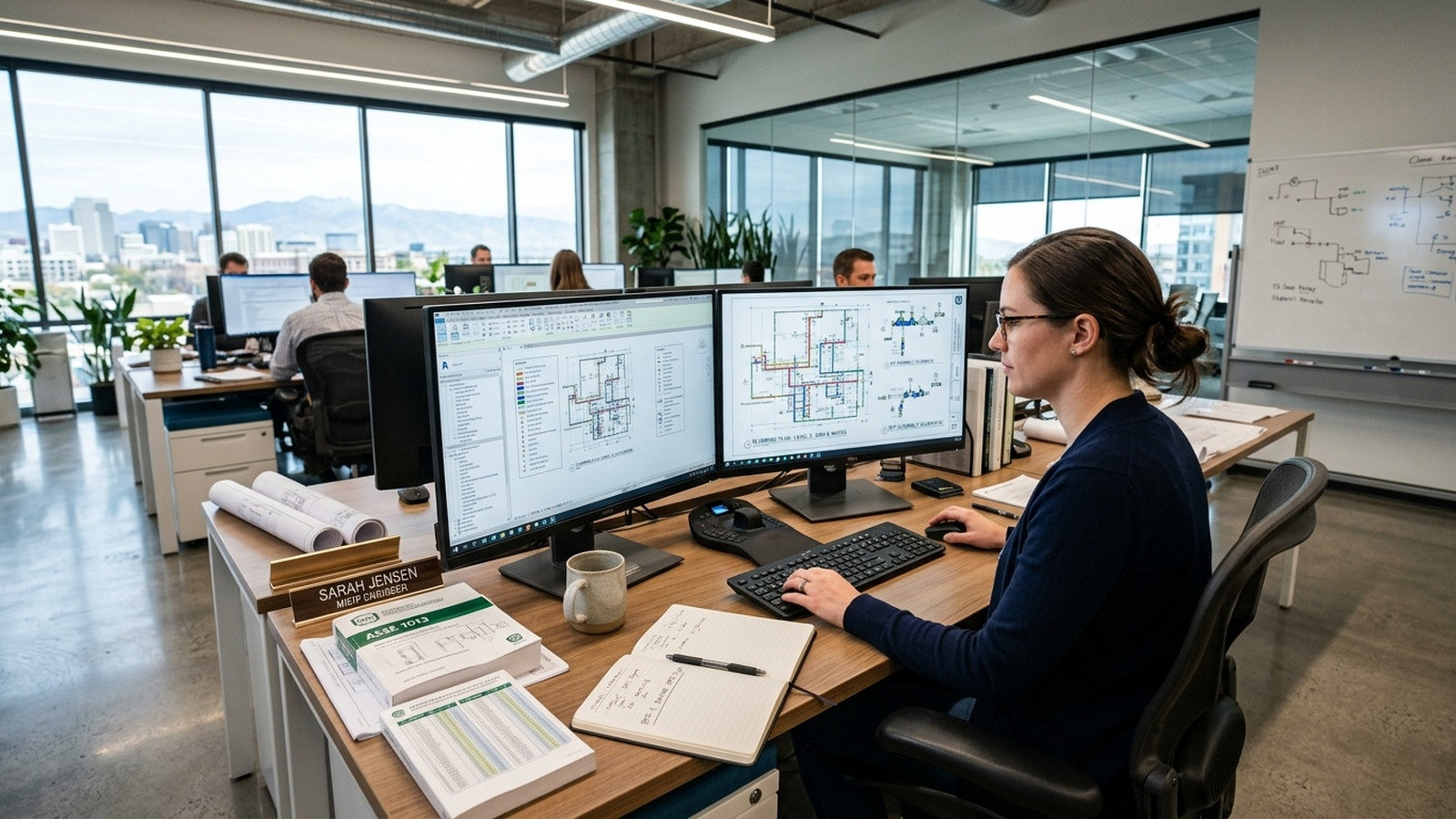
The Bottleneck of Fan Coil Unit Revisions in Commercial MEP Projects
Commercial building projects, from hospitality towers to multi-family developments and zoned office interiors, rely heavily on fan coil units (FCUs) for localized thermal comfort. While placing initial horizontal ceiling-concealed or vertical floor-mounted FCUs is straightforward during schematic design, managing subsequent revisions across dozens of sheets quickly becomes a grueling drafting bottleneck. Architectural layout changes, revised ceiling heights, structural soffit additions, and equipment capacity re-selections routinely force MEP engineers and CAD drafters to rebuild terminal unit connections repeatedly.
Every time an architect shifts a ceiling drywall boundary or an MEP engineer resizes a chilled water coil, the downstream drafting chore multiplies. CAD operators must manually reposition the terminal equipment block, stretch hydronic supply and return pipe runs, adjust balancing valves and strainers, re-route condensate gravity drain lines with proper slope, and reconfigure supply air duct transitions and flex duct takeoffs to diffusers. When performed sheet by sheet across complex AutoCAD DWG drawings, this tedious manual work introduces dimension inconsistencies, layer mismatch errors, and significant project delivery delays.
Why Manual Drafting Updates on Fan Coil Units Cause Compounding Errors
The core challenge with updating terminal unit drawings in conventional CAD environments is that an FCU is not an isolated component. It serves as an intersection where three critical MEP trades converge: hydronic piping, HVAC air distribution, and gravity drainage. When an interior wall or ceiling framing plan changes, moving an FCU requires synchronized adjustments across multiple disciplines within the same CAD drawing file.
First, hydronic piping runs must maintain service access clearance. If a drafter moves the unit without carefully checking isolation valve and circuit setter placements, maintenance access panels will no longer align in construction administration. Second, HVAC ductwork connections require balanced static pressure considerations. Moving an FCU thirty inches closer to a structural beam often compresses rigid supply plenums or exceeds allowable flexible duct length rules under ASHRAE standards. Third, condensate drainage requires continuous slope down to indirect waste hubs or risers. A rushed manual repositioning in plan view can easily produce an unbuildable flat pipe run in the field, exposing the engineering firm to costly requests for information (RFIs) and contractor change orders.
For CAD managers and drafting leads, assigning skilled mechanical designers to perform repetitive FCU stretching and line-cleaning tasks across twenty floor plans is an inefficient use of engineering payroll that stifles billable design hours.
Accelerating DWG Terminal Unit Revisions with Natural-Language Automation
Rather than burning engineering hours on repetitive mouse clicks or attempting to deploy cumbersome LISP scripts that break across different project templates, forward-thinking MEP firms are adopting intelligent cloud automation. With AutoMEP, drafting teams can execute complex AutoCAD DWG modifications simply by entering natural-language instructions.
AutoMEP acts as an AI drafting co-pilot that understands building geometry and MEP systems context. By analyzing the underlying DWG entities and spatial layouts directly, the system can interpret engineering directives and apply native AutoCAD drafting modifications automatically. Instead of opening each sheet, searching for unit tags, moving equipment blocks, and redrawing four connecting utility lines, drafting managers can specify changes using natural language commands such as:
- Reposition FCU-2-01 through FCU-2-14 twelve inches east to clear the newly shifted architectural drywall soffit, and automatically extend hydronic supply and return lines while maintaining existing pipe sizing and valve assemblies.
- Re-route rigid supply duct transitions to align squarely with centered ceiling diffusers, limiting flexible duct run lengths to under six feet.
- Maintain a minimum one-eighth-inch-per-foot downward slope on all relocated condensate drain lines connecting back to the vertical wet stack.
- Preserve all mechanical layer standards, equipment attribute tags, and leader callouts exactly to existing firm standards.
Because these edits are carried out programmatically using direct CAD geometry manipulation, the output consists of clean, native AutoCAD DWG elements. There are no proprietary proxy objects, no corrupted xref definitions, and no risky software plugins that CAD managers have to push across local user workstations.
Maintaining Rigorous Quality Control and Audit Trails
Delegating repetitive drafting edits to automation must never come at the expense of professional engineering oversight. A common concern among MEP firm owners and operations leaders is that automated edits might introduce unchecked anomalies into production drawing sets.
AutoMEP eliminates this concern by integrating comprehensive version control, visual difference checks, and automated job logs into every revision cycle. When an automated FCU modification is processed, the platform documents every entity adjustment, block displacement, and layer interaction. CAD managers can quickly inspect the updated DWG alongside previous revisions, verifying that valve symbols, duct taps, and clearance envelopes remain strictly compliant before sealing and issuing drawing packages. If an architect reverses a layout change, the firm can revert to prior states seamlessly with complete traceability.
Scale MEP Drafting Throughput Without Increasing Headcount
In today's competitive engineering market, the firms that protect profit margins are those that remove low-value, repetitive drafting friction from their technical staff. Forcing seasoned MEP designers and BIM technicians to spend dozens of hours nudging fan coil unit blocks, snapping pipe fittings, and re-trimming duct lines is a direct path to project burnout and revision backlogs.
By leveraging natural-language CAD automation to handle routine terminal unit updates, mechanical engineering practices can dramatically shorten turnaround times on client addenda, value engineering cycles, and permit resubmittals. To discover how your drafting team can complete repetitive DWG revisions, visit AutoMEP today and experience seamless AutoCAD MEP design automation.